
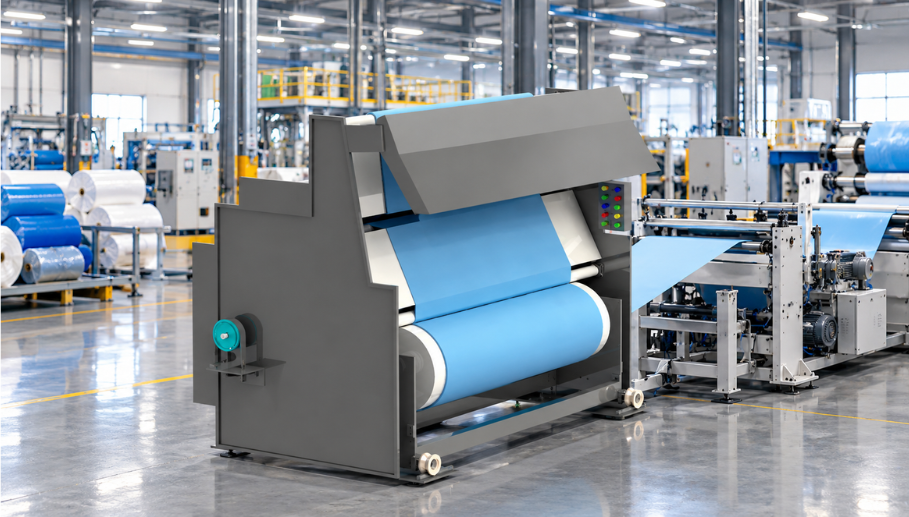
Fabric Inspection Machines: Importance, Working Process and Benefits for Textile Quality Control
Quality inspection is an important part of textile manufacturing. Even when weaving, knitting, dyeing, printing, coating, and finishing processes are carefully controlled, fabric can still contain visible or functional defects that need to be identified before the material moves to the next production stage.
A fabric inspection machine provides a structured way to examine fabric continuously and identify defects, irregularities, and quality issues.
For textile manufacturers, fabric inspection is particularly important when consistent quality is required across large production volumes. A suitable inspection system can help operators examine fabric more efficiently, maintain inspection records, and identify problems before defective material reaches subsequent processing or customers.
Shakti Textile Engineers offers Fabric Inspection Machines and related inspection and winding equipment for textile processing applications.
What Is a Fabric Inspection Machine?
A fabric inspection machine is textile machinery designed to help operators examine fabric for visible defects and irregularities.
The fabric is passed through the inspection machine at a controlled speed while an operator or inspection system examines the material.
Depending on the machine configuration, inspection may focus on:
- Fabric surface defects
- Weaving or knitting irregularities
- Colour variations
- Printing defects
- Stains and marks
- Holes or tears
- Coating irregularities
- Creases and other visible issues
The specific defects that can be identified depend on the fabric type, inspection method, machine configuration, lighting, and inspection criteria.
Why Is Fabric Inspection Important?
Fabric inspection helps manufacturers identify quality issues before fabric reaches subsequent production stages.
Early identification can be useful for several reasons.
1. Defect Identification
Inspection allows operators to identify visible defects while the fabric is being processed.
2. Quality Consistency
Regular inspection can help manufacturers maintain consistent quality standards across fabric rolls.
3. Reduced Downstream Problems
Identifying defects earlier may prevent unsuitable fabric from progressing unnecessarily through additional production processes.
4. Better Roll Assessment
Inspection provides an opportunity to assess the condition of fabric before it is dispatched, processed further, or converted into finished products.
5. Production Monitoring
Repeated defects can sometimes indicate an issue earlier in the manufacturing process. Inspection findings can therefore provide useful feedback to production teams.
How Does a Fabric Inspection Machine Work?
The exact operating process depends on the machine design, but fabric inspection generally involves controlled fabric movement and visual examination.
Step 1: Fabric Loading
The fabric roll is mounted on the machine and prepared for inspection.
The machine must hold and guide the fabric appropriately to allow the inspection area to remain visible.
Step 2: Controlled Fabric Movement
The fabric passes through the inspection machine at a controlled speed.
Consistent movement allows the operator to examine the fabric systematically.
Step 3: Inspection Area
The fabric passes through a dedicated inspection area where suitable lighting makes the fabric surface visible.
Lighting conditions are important because different fabric colours, structures, and defects may require different visual conditions.
Step 4: Defect Identification
The operator examines the fabric for visible irregularities.
Depending on the production environment, defects may be marked or recorded for further processing.
Step 5: Fabric Rewinding
After inspection, the fabric can be wound into another roll according to the machine configuration.
Inspection and winding functions can therefore be integrated into a single production process.
What Types of Fabric Defects Can Be Detected?
The types of defects that can be identified vary depending on the fabric and inspection system.
Common categories can include:
Surface Defects
These may include visible marks, stains, scratches, or other surface irregularities.
Weaving Defects
Woven fabrics can contain issues related to warp or weft yarns.
Knitting Defects
Knitted fabrics may contain irregularities associated with loops, yarns, or fabric construction.
Colour Variations
Uneven colouring or visible shade differences may be identified during inspection.
Printing Defects
Printed fabrics can be examined for registration issues, missing areas, smudges, or other visible printing irregularities.
Holes and Tears
Physical damage to the fabric can be identified during visual inspection.
Coating Defects
For coated textiles, inspection may help identify visible variations or defects in the coating surface.
The exact inspection criteria should be established according to the fabric specification and customer’s quality requirements.
Manual vs Machine-Assisted Fabric Inspection
Fabric inspection can be performed using different levels of automation.
Factor | Manual Inspection | Machine-Assisted Inspection |
Operator involvement | High | Depends on system |
Fabric movement | May be manually controlled | Controlled by machine |
Inspection lighting | Can be basic or dedicated | Designed around inspection area |
Roll handling | May require separate processes | Can integrate fabric handling |
Data and defect recording | May be manual | May include integrated options |
Production consistency | Depends significantly on operator | Can provide more controlled processing |
The appropriate system depends on production volume, fabric type, inspection standards, available labour, and the manufacturer’s automation requirements.
Role of Lighting in Fabric Inspection
Lighting is one of the most important components of a visual inspection process.
The fabric surface needs to be clearly visible so that operators can identify defects accurately.
Poor lighting can make certain defects difficult to detect, particularly on:
- – Dark fabrics
- – Patterned fabrics
- – Reflective materials
- – Technical textiles
- – Printed fabrics
The inspection environment should therefore be designed according to the types of fabric being examined.
Fabric Inspection for Different Textile Processes
Fabric inspection is not limited to one stage of textile manufacturing.
It can be used at different points depending on the production process.
After Weaving or Knitting
Inspection can identify construction-related defects before further processing.
After Dyeing
Inspection can help identify colour variations, stains, or other visible issues.
After Printing
Printed fabrics can be inspected for printing-related defects.
After Coating
Coated fabrics may require inspection for surface irregularities or coating consistency.
Before Dispatch
Finished fabric rolls can be inspected before shipment to customers.
The appropriate inspection stage depends on the manufacturer’s quality-control system.
Fabric Inspection After Coating
Coated fabrics can require additional inspection because the coating process introduces another layer of production variables.
Potential areas for inspection can include:
- – Surface appearance
- – Coating consistency
- – Visible marks
- – Uneven areas
- – Bubbles or other surface irregularities
- – Fabric damage
Shakti Textile Engineers manufactures coating machinery as well as inspection machinery, allowing manufacturers to consider inspection as part of a broader textile processing setup.
Its coating machinery portfolio includes PVC/PU coating systems and supporting equipment, while its product range also includes fabric inspection machinery.
Benefits of Using a Fabric Inspection Machine
Improved Inspection Efficiency
A dedicated machine provides a structured environment for examining fabric continuously.
Controlled Fabric Handling
Machine-assisted fabric movement can make inspection and rewinding more organized.
Better Defect Visibility
Appropriate inspection lighting can improve the visibility of surface irregularities.
Reduced Manual Handling
Integrated inspection and winding can reduce unnecessary movement of fabric rolls.
Early Quality Feedback
Identifying defects during production can provide useful information for manufacturing teams.
Consistent Inspection Process
A defined inspection process can help standardize how fabric is examined.
Fabric Inspection and Quality Control
Fabric inspection should be considered as one component of a broader quality-control system.
A quality-control process may include:
- Raw material inspection
- Yarn or fibre quality checks
- Weaving or knitting monitoring
- Dyeing and finishing checks
- Fabric inspection
- Final roll assessment
- Documentation and dispatch checks
The exact sequence depends on the textile product and manufacturing process.
Inspection machinery supports the visual and physical examination stage but does not replace process control throughout the entire manufacturing operation.
What Should You Consider When Choosing a Fabric Inspection Machine?
Manufacturers should evaluate the machine against their specific production requirements.
1. Fabric Width
The machine should accommodate the fabric widths being processed.
2. Fabric Type
Different fabrics may have different inspection requirements.
Consider whether the machine will process:
- – Woven fabrics
- – Knitted fabrics
- – Coated fabrics
- – Printed fabrics
- – Technical textiles
- – Synthetic fabrics
- – Blended fabrics
3. Inspection Speed
The required inspection speed should be considered in relation to defect visibility and production capacity.
A higher inspection speed should not compromise the ability to identify relevant defects.
4. Lighting Arrangement
The inspection area should provide suitable visibility across the fabric width.
5. Fabric Tension
Controlled fabric handling is important for maintaining a suitable inspection surface.
6. Winding System
If the machine includes winding functionality, manufacturers should evaluate whether the winding arrangement suits their roll requirements.
7. Automation
The required level of automation depends on production volume, workforce, quality-control requirements, and available infrastructure.
8. Maintenance and Service
The machine should be evaluated for accessibility, maintenance requirements, technical support, and availability of relevant service assistance.
Fabric Inspection Machine for Textile Manufacturers
For textile manufacturers, choosing an inspection machine should begin with a clear understanding of the quality standards that need to be maintained.
Before selecting equipment, define:
- Fabric types
- Fabric widths
- Production volume
- Inspection criteria
- Defect categories
- Required inspection speed
- Roll dimensions
- Winding requirements
- Operator requirements
- Automation level
This information can help the machinery manufacturer recommend a suitable machine configuration.
Fabric Inspection and Winding
Inspection and winding are closely connected in many textile production environments.
Once fabric has been inspected, it may need to be rewound into a suitable roll for storage, further processing, or dispatch.
A machine that integrates inspection and winding can provide a more organized workflow.
Shakti Textile Engineers’ product range includes inspection and winding solutions for fabric processing applications.
Fabric Inspection Machine From Shakti Textile Engineers
Shakti Textile Engineers manufactures textile machinery for processing, finishing, coating, inspection, laminating, and related applications.
Its product range includes Fabric Inspection Machines designed for textile quality-control operations.
The company also offers a broader range of machinery that can be used before or after fabric inspection, including coating, finishing, laminating, and fabric-handling equipment.
For manufacturers evaluating fabric inspection machinery, the machine configuration should be discussed according to the fabric type, width, inspection requirements, production capacity, and roll-handling needs.
Frequently Asked Questions
What is a fabric inspection machine?
A fabric inspection machine is equipment used to examine fabric for visible defects and irregularities while the fabric is passed through a controlled inspection area.
Why is fabric inspection important?
Fabric inspection helps identify defects before fabric moves to subsequent processing stages or reaches the customer.
What defects can a fabric inspection machine detect?
Depending on the fabric and inspection setup, defects may include stains, holes, tears, colour variations, weaving or knitting irregularities, printing defects, and other visible surface problems.
Can fabric inspection be performed after coating?
Yes. Coated fabrics can be inspected for visible surface irregularities and other coating-related defects as part of quality control.
What fabrics can be inspected?
The suitable fabric range depends on the machine configuration. Fabric inspection systems can be designed for applications involving woven, knitted, synthetic, coated, printed, and technical fabrics.
Is a fabric inspection machine fully automatic?
Automation levels vary between machines. Some systems rely heavily on operator inspection, while others may incorporate automated handling or inspection-related functions.
What should I consider before purchasing a fabric inspection machine?
Important factors include fabric width, fabric type, inspection criteria, inspection speed, lighting, tension control, winding requirements, automation, maintenance, and technical support.
Does Shakti Textile Engineers manufacture fabric inspection machines?
Yes. Fabric inspection machinery is included in Shakti Textile Engineers’ textile machinery portfolio.
Conclusion
A fabric inspection machine provides textile manufacturers with a structured method for examining fabric and identifying visible defects before further processing or dispatch.
The effectiveness of the inspection process depends on several factors, including fabric handling, inspection lighting, machine speed, operator visibility, fabric characteristics, and clearly defined quality standards.
For manufacturers selecting inspection equipment, the right machine should be matched to the actual fabric range, production volume, inspection requirements, and roll-handling process.
Shakti Textile Engineers offers fabric inspection machinery as part of its broader portfolio of textile processing, coating, finishing, laminating, and fabric-handling equipment.